Few cartridges have shaped the modern firearms world quite like the 9mm.
From military sidearms to everyday carry pistols, the 9mm cartridge has become the dominant handgun round across the globe. Law enforcement agencies rely on it. Civilian shooters train with it. And manufacturers have built entire product lines around it.
Its rise wasn’t accidental.
The 9mm struck a balance that few cartridges manage: manageable recoil, strong performance, and enough capacity to make it practical in a wide range of firearms.
Today, it stands as the most widely used handgun cartridge in the world.
This article is part of The Caliber Series, where we explore the history, design, and real-world role of the cartridges that power the modern firearms industry.
Quick Facts: 9mm
- Full name: 9×19mm Parabellum
- Inventor: Georg Luger
- Year introduced: 1902
- Bullet diameter: ~.355 inches
- Common uses: self-defense, law enforcement, military, target shooting
Despite being more than a century old, the cartridge remains the dominant handgun round in modern firearms.
The Origins of 9mm
The 9mm cartridge traces its roots back to Germany at the turn of the 20th century.
In 1902, firearms designer Georg Luger developed the cartridge while working to improve the performance of the Luger pistol. The result was the 9×19mm Parabellum, designed to offer reliable feeding in semi-automatic pistols while maintaining manageable recoil.
The name Parabellum comes from the Latin phrase:
Si vis pacem, para bellum —
"If you want peace, prepare for war."
The cartridge quickly gained traction and was adopted by the German military in 1908, becoming one of the first successful semi-automatic pistol cartridges to see widespread military use.
From there, its global influence only grew.
Global Military Adoption
Throughout the 20th century, the 9mm cartridge spread rapidly across military forces worldwide.
Many nations eventually standardized on 9mm for their sidearms, and NATO officially adopted 9×19mm as its standard pistol cartridge in 1985.
Today, the cartridge is used in military pistols across dozens of countries.
Its combination of manageable recoil, magazine capacity, and reliability made it an ideal service cartridge.
9mm and the Rise of the Modern Handgun
While 9mm had long been used in Europe, its rise in the United States accelerated in the late 20th century.
Several major factors contributed to this shift:
The rise of semi-automatic pistols
As law enforcement and civilians transitioned away from revolvers, semi-automatic pistols offered higher capacity and faster reloads.
Magazine capacity
A typical 9mm handgun can hold 15–17 rounds, significantly more than many larger calibers.
Manageable recoil
Compared to cartridges like .40 S&W or .45 ACP, 9mm produces less recoil, allowing shooters to maintain faster and more accurate follow-up shots.
9mm in World War I and World War II
The early rise of the 9mm cartridge was closely tied to military adoption in the early 20th century.
After being introduced by Georg Luger in 1902, the German military officially adopted the 9×19mm cartridge in 1908 for use in the Luger P08 pistol. This made 9mm one of the first cartridges designed specifically for semi-automatic service pistols.
During World War I, German officers and specialized troops carried Luger pistols chambered in 9mm, marking one of the earliest large-scale military uses of a semi-automatic handgun cartridge. The cartridge later appeared in early submachine guns as well, demonstrating that it could function effectively in both pistols and automatic weapons.
By World War II, 9mm had become firmly established within German forces and was used in several iconic firearms of the era, including:
- Luger P08 pistol
- Walther P38 pistol
- MP38 and MP40 submachine guns
The United States took a different approach during these wars. American forces relied primarily on the .45 ACP cartridge, carried in the famous M1911 pistol and chambered in submachine guns like the Thompson and later the M3 “Grease Gun.” The .45 ACP had been adopted by the U.S. military in 1911 and remained the standard American service pistol cartridge throughout both World Wars.
While the U.S. stayed committed to .45 ACP during this period, the widespread wartime use of 9mm across Europe helped establish the cartridge as a practical and versatile military round.
In the decades following World War II, many nations standardized their sidearms around 9mm pistols. Eventually, NATO formally adopted 9×19mm as its standard pistol cartridge in 1985, and the United States followed suit with the adoption of the Beretta M9 service pistol.
More than a century after its introduction, the same cartridge first adopted by the German military is now used by armed forces, law enforcement agencies, and civilian shooters across the globe.
The FBI and the Return to 9mm
In the 1990s, many U.S. law enforcement agencies transitioned from 9mm to larger calibers like .40 S&W in search of greater stopping power.
But ballistic technology evolved.
Modern bullet design dramatically improved the performance of 9mm defensive ammunition, particularly hollow point rounds.
After extensive testing, the FBI officially returned to 9mm in 2014, citing:
- improved terminal performance
- reduced recoil
- increased magazine capacity
- better shooter accuracy
That decision influenced law enforcement agencies across the country and helped cement the 9mm’s dominance once again.
Common 9mm Bullet Types
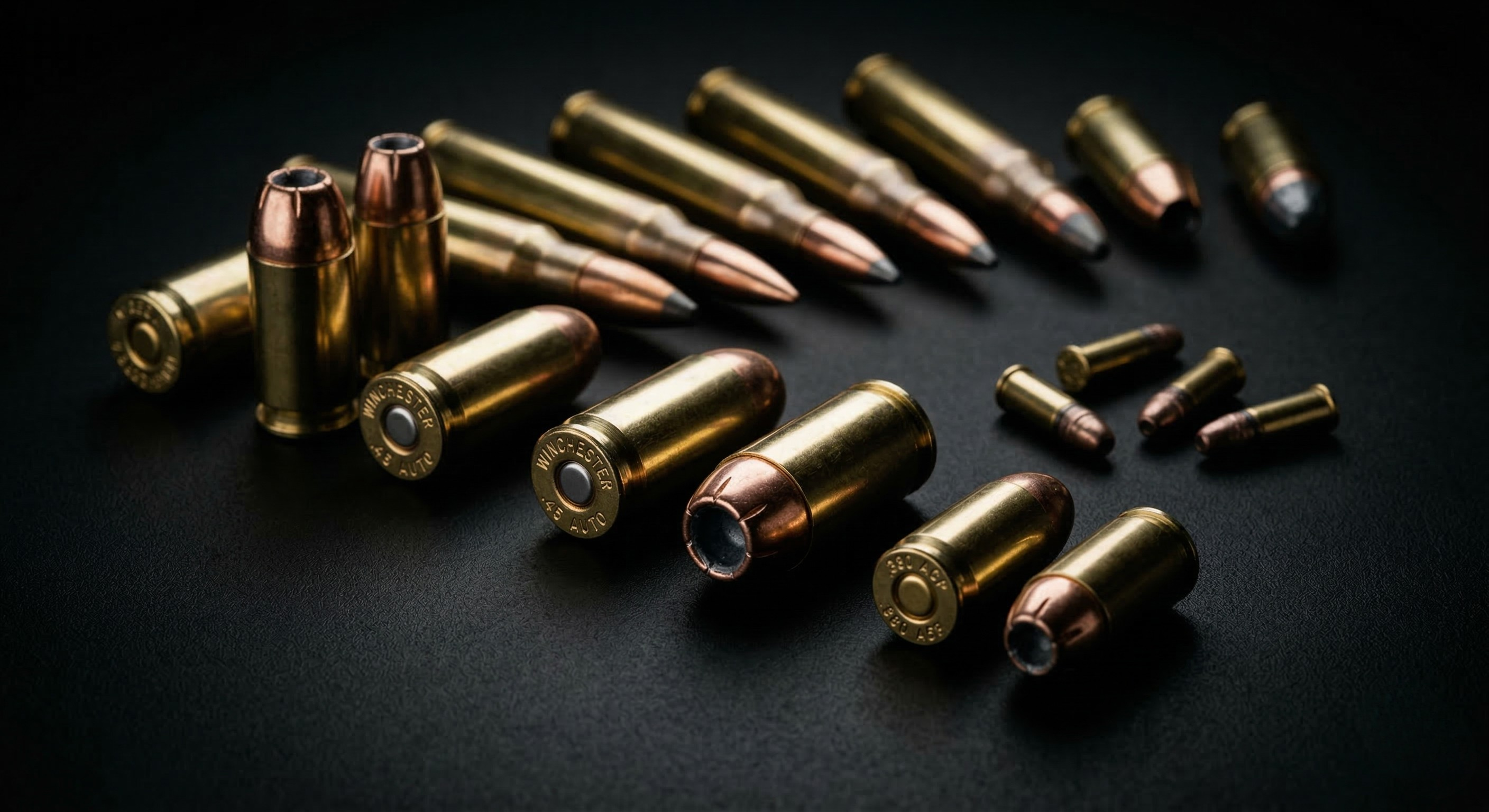
Like most handgun cartridges, 9mm ammunition comes in several bullet designs.
- FMJ (Full Metal Jacket)
Most common for range training and practice. - Hollow Point
Designed to expand upon impact, commonly used for defensive ammunition. - Frangible
Designed to break apart on impact to reduce ricochet risk.
Each type is designed for different shooting applications.
Common 9mm Bullet Weights
Bullet weight in 9mm ammunition is measured in grains.
The most common options include:
- 115 grain
Typically used for range training. - 124 grain
A balanced load often used in defensive ammunition. - 147 grain
A heavier option commonly used for subsonic or suppressed shooting.
These variations allow shooters to tailor performance based on their needs.
Some of the Most Popular 9mm Firearms
The cartridge’s popularity is reflected in the firearms built around it.
Some of the most widely recognized 9mm pistols include:
- Glock 19
- Sig Sauer P365
- Smith & Wesson M&P 9
- CZ 75
- Beretta 92
Each of these platforms helped cement the cartridge’s reputation for reliability and versatility.
The Future of 9mm
More than 120 years after its introduction, the 9mm cartridge shows no signs of slowing down.
Advances in bullet technology continue to improve its performance, and manufacturers release new 9mm handgun models every year.
It remains the standard by which other handgun cartridges are measured.
Where Slingit Fits In
Understanding calibers like 9mm helps firearm owners better understand the firearms they own.
Every firearm is built around a specific cartridge, and that cartridge often influences the firearm’s design, use case, and even market value.
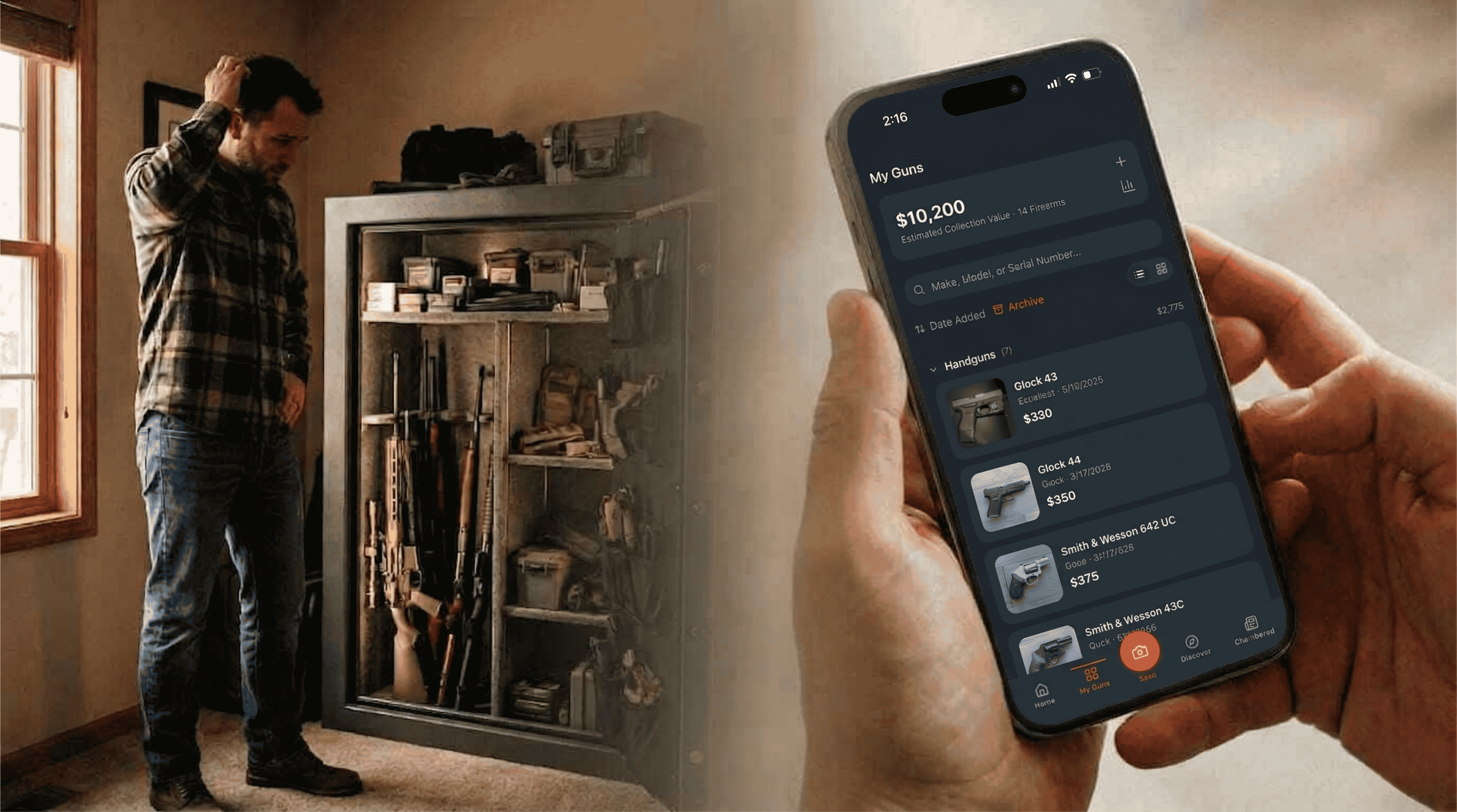
With Slingit, gun owners can:
- catalog their firearms
- track market value
- follow industry trends
- gain deeper insight into their collections
Next in The Caliber Series
Next up in The Caliber Series:
.22 Long Rifle — the most widely produced ammunition cartridge in history.
From training new shooters to recreational plinking, the .22 LR has earned a place in nearly every gun owner’s safe.