
The Caliber Series: The Complete Guide to Ammunition
The firearm world runs on numbers.
.22
.223
.380
.45
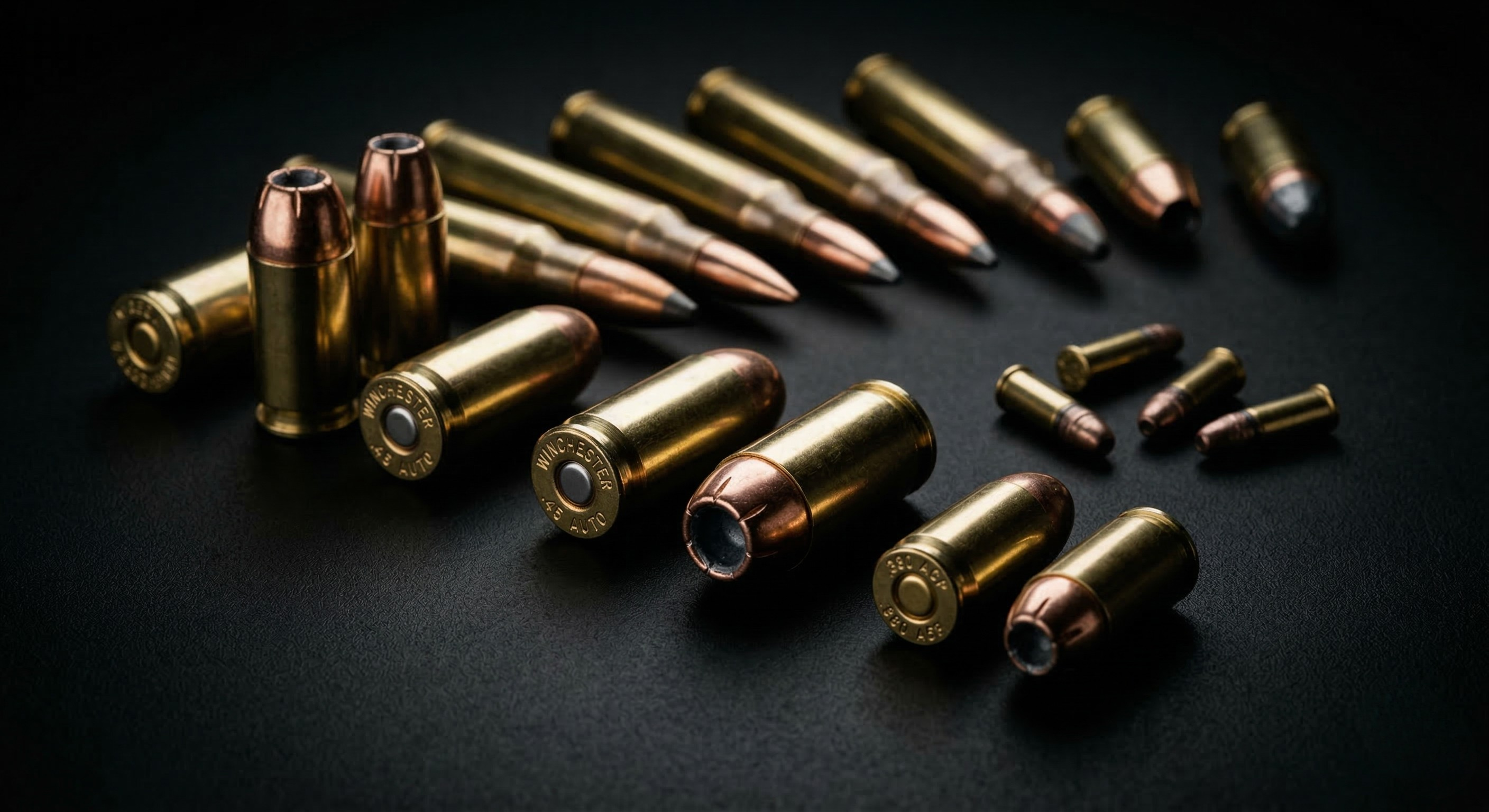
Every one of those numbers points to a specific caliber, and behind each caliber is a lineage of cartridges, firearms, and real-world use cases that helped shape the modern shooting world. Some were born out of military trials. Others were designed for hunting, personal defense, or competitive shooting. A few became so successful that they now define entire segments of the firearms market.
Understanding those calibers — where they came from, how they’re used, and why they stuck around — is one of the best ways to better understand firearms themselves.
This article kicks off The Caliber Series, where we’ll explore the history, engineering, and real-world role of the cartridges that power the modern firearms industry.
Before diving into individual cartridges in future posts, it helps to start with the fundamentals.
How Modern Ammunition Works
Modern metallic cartridges are an elegant piece of engineering. Each round of ammunition combines several components working together in a controlled explosion.
Bullet
The projectile that exits the barrel.
Case
The metal casing that holds the cartridge components.
Powder
The propellant that generates pressure when ignited.
Primer
The ignition compound struck by the firing pin.
When a firearm is discharged:
- The firing pin strikes the primer.
- The primer ignites the powder inside the case.
- Expanding gases rapidly build pressure.
- That pressure forces the bullet down the barrel and toward its target.
This process takes place in milliseconds, but small variations in cartridge design can dramatically affect velocity, recoil, and terminal performance.
Caliber vs Cartridge: Understanding the Difference
In everyday conversation, shooters often use caliber and cartridge interchangeably. While closely related, they technically describe different things.
Caliber
The diameter of the bullet or the internal diameter of a firearm’s barrel.
Cartridge
The complete round of ammunition, including the bullet, case, powder, and primer.
For example:
- .45 caliber refers to bullet diameter.
- .45 ACP refers to a specific cartridge designed in 1904 by John Moses Browning.
One caliber often supports multiple cartridges.
.22 caliber
- .22 LR
- .22 WMR
- .223 Remington
.30 caliber
- .308 Winchester
- .30-06 Springfield
- .300 Blackout
.45 caliber
- .45 ACP
- .45 Colt
Understanding this relationship between calibers and cartridges helps explain why certain numbers appear repeatedly across different firearms.
Rimfire vs Centerfire Ammunition
Another important distinction in ammunition is how the cartridge ignites.
Rimfire
Rimfire cartridges contain primer compound inside the rim of the case.
Examples include:
- .22 Long Rifle
- .22 Magnum
Advantages include:
- low cost
- low recoil
- simple manufacturing
This makes rimfire ammunition extremely popular for training and recreational shooting.
Centerfire
Centerfire cartridges contain a separate primer located in the center of the cartridge base.
Examples include:
- 9mm
- .223 / 5.56
- .308 Winchester
- .45 ACP
Centerfire cartridges are typically:
- more powerful
- reloadable
- used for defensive, hunting, and military applications
Most modern handgun and rifle cartridges fall into this category.
Common Bullet Types Explained
The bullet itself plays a major role in how ammunition behaves. Different bullet designs are optimized for different purposes.
FMJ (Full Metal Jacket)
Lead core enclosed in a copper jacket.
Typical use: Training and range shooting.
Hollow Point (HP)
Bullet with a hollow cavity designed to expand on impact.
Typical use: Self-defense ammunition.
Soft Point (SP)
Bullet with an exposed lead tip that allows controlled expansion.
Typical use: Hunting.
Ballistic Tip
Bullet with a polymer tip designed to improve aerodynamics and promote controlled expansion.
Typical use: Precision hunting and long-range shooting.
Frangible
Bullet designed to break apart on impact to reduce ricochet risk.
Typical use: Steel targets and specialized training environments.
What Does “Grain” Mean?
Ammunition is often labeled with numbers like 115 grain or 147 grain.
Grain refers to bullet weight, not size.
Light weight bullets
Typically offer higher velocity and slightly reduced recoil.
Medium weight bullets
Provide a balance between velocity, recoil, and terminal performance.
Heavy weight bullets
Often used for deeper penetration, defensive loads, or subsonic applications.
For example, common 9mm bullet weights include:
115 grain
Most commonly used for range training and target shooting.
124 grain
A balanced option often used in defensive ammunition.
147 grain
Heavier load commonly used for subsonic shooting or suppressed firearms.
Even small changes in bullet weight can alter recoil and ballistic performance.
The Most Popular Ammo Calibers in America
While hundreds of cartridges exist, a handful dominate the U.S. market.
Estimated civilian ammunition consumption annually:
.22 LR
Estimated annual rounds in the U.S.: 3–4 billion
9mm
Estimated annual rounds in the U.S.: 1.5–2 billion
.223 / 5.56
Estimated annual rounds in the U.S.: 1–1.5 billion
12 Gauge
Estimated annual rounds in the U.S.: 700 million – 1 billion
.45 ACP
Estimated annual rounds in the U.S.: 300–400 million
The clear leader is .22 Long Rifle, which has remained the most widely produced cartridge in the world for decades.
Meanwhile:
- 9mm dominates the handgun market
- .223 / 5.56 dominates modern sporting rifles
- 12 gauge remains the most versatile shotgun cartridge
Each of these will be explored in detail later in The Caliber Series.
When Calibers Fade Away: Forgotten Cartridges
Not every cartridge survives.
Throughout firearms history, hundreds of cartridges have been introduced with the hope of becoming the next industry standard. Some succeed and become fixtures for generations. Others fade away as technology advances or more practical designs emerge.
Here are a few interesting examples.
.41 Action Express
Introduced in the late 1980s, .41 Action Express was designed as a middle ground between 9mm and .45 ACP.
One clever feature of the cartridge was its rebated rim, which allowed pistols designed for 9mm to convert to .41 AE with only a barrel change.
Despite its innovation, the cartridge struggled to gain adoption. When .40 S&W arrived in the early 1990s, it quickly filled the same niche and effectively ended the .41 AE’s momentum.
Today it remains mostly a collector curiosity.
.256 Winchester Magnum
Released in 1960, the .256 Winchester Magnum was designed as a high-velocity small-game and varmint cartridge.
It appeared in firearms like the Marlin Levermatic rifle and the Ruger Hawkeye pistol but never achieved widespread popularity. As a result, production dwindled and the cartridge gradually disappeared from mainstream use.
.44 Henry Rimfire
One of the earliest successful metallic cartridges, the .44 Henry Rimfire debuted in 1860 and was famously used in the Henry rifle during the Civil War.
Although historically significant, the cartridge eventually became obsolete as more powerful centerfire cartridges replaced early rimfire designs.
.218 Bee
Introduced by Winchester in 1937, the .218 Bee was designed as a small-game and varmint cartridge.
Although ballistically effective, it was commonly chambered in lever-action rifles that struggled with reliable feeding. As bolt-action rifles became the preferred platform for varmint hunting, cartridges like the .222 Remington and .223 Remington quickly overshadowed it.
Why Some Calibers Survive
Cartridges that endure usually succeed because they strike the right balance between several factors:
- performance
- recoil
- firearm compatibility
- ammunition availability
- military or law-enforcement adoption
The calibers that dominate today — including .22 LR, 9mm, and .223 Remington — succeeded because they solved real problems for shooters and gained widespread adoption.
In many ways, the modern ammunition landscape is the result of more than a century of experimentation.
Where Slingit Fits In
Understanding calibers and cartridges is part of understanding firearms themselves.
Every firearm is built around a specific cartridge, and that cartridge often influences the firearm’s role, design, and even market value.
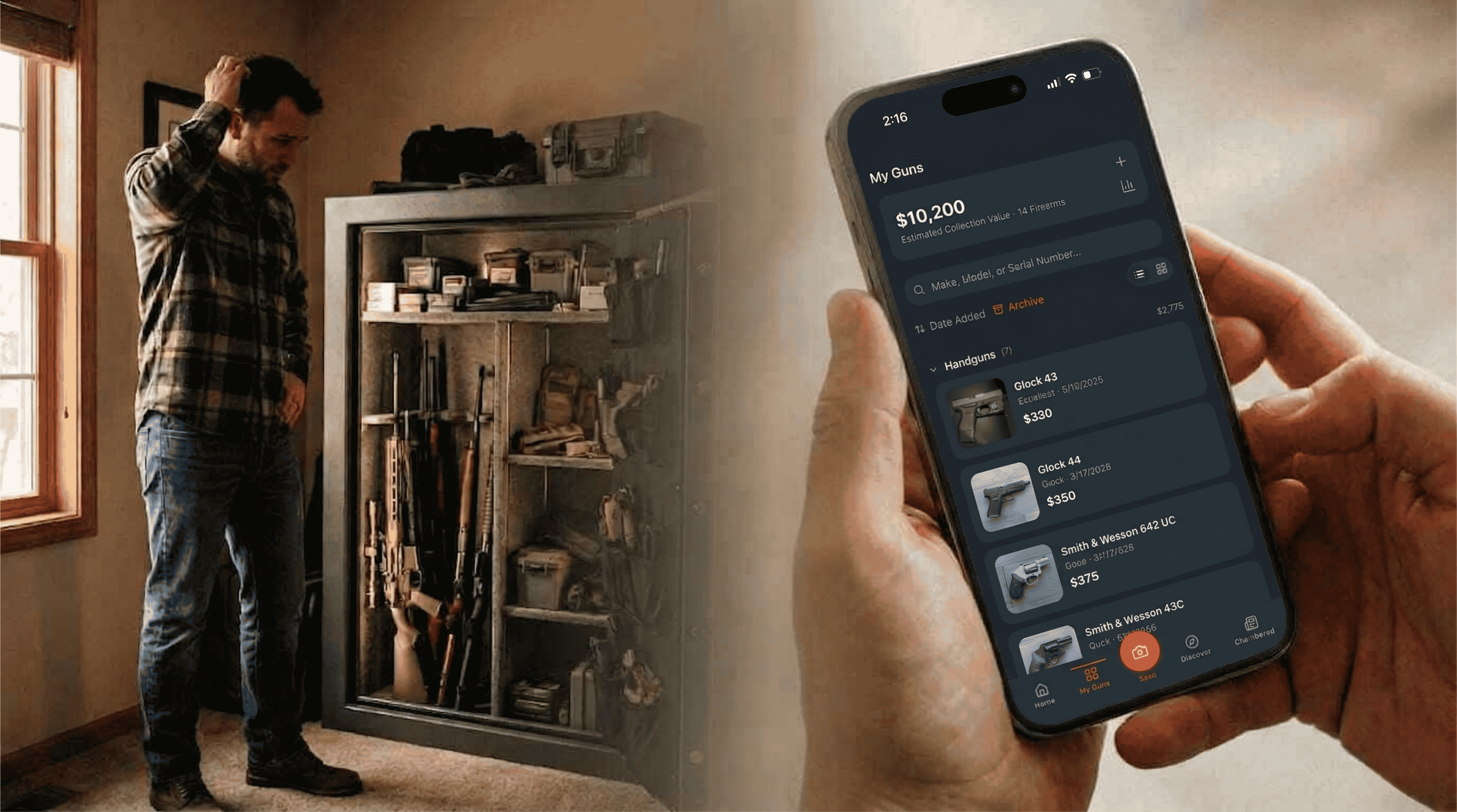
With the Slingit app for consumers, firearm owners can:
- catalog their firearms
- track estimated market value
- follow firearm market trends
- gain deeper insight into their collections
As we explore more cartridges throughout The Caliber Series, the connection between firearms, calibers, and market trends becomes increasingly clear.
What’s Next in The Caliber Series
This article lays the foundation.
Upcoming posts in The Caliber Series will take a deeper look at the cartridges that shaped the modern firearms world, including:
- 9mm — The world’s most popular handgun cartridge
- .22 LR — The most widely produced ammunition ever made
- .223 / 5.56 — The cartridge behind the AR-15 platform
- 12 Gauge — The most versatile shotgun ammunition
Each of these cartridges has its own story.
And in many cases, those stories helped shape the firearms industry itself.
Welcome to The Caliber Series.